I. The Diocese Reborn
By the 1800s, the Penal Laws introduced during the Reformation were gradually easing. In 1850, under Pope Pius IX, the standard hierarchical system was restored in England. Northampton became a Bishopric for the first time, and the town's single Catholic church was elevated to Cathedral status.
For decades, Catholic life remained concentrated in the town centre. However, as Northampton expanded in the 1930s, a major railway line passing through the town's west end physically isolated the areas of St James End, Duston, and Dallington. Their growing Catholic populations were suddenly cut off from the Cathedral, necessitating local chapels alongside a new pastoral approach.
II. The Travelling Mission
To reach these disconnected communities, an assistant priest from the Cathedral established a Diocesan Travelling Mission. Driving a light van loaded with all the necessities for liturgy across the western Northamptonshire countryside, he offered Mass wherever space could be found — in halls, public houses, private homes, and even a large army hut erected in Spratton (which became the English Martyrs Chapel) for a peppercorn rent.
In 1939, for the first time since the Reformation, a Roman Catholic service was held in Duston at the Village Institute. By 1940, sheer demand necessitated an irregular mission becoming a weekly Sunday Mass. In 1941, Duston was officially designated a Mass Centre — recognizing that the Catholic community had put down roots and required a permanent place to gather.
III. The First Brick Church (1953)
Following the Second World War, a coordinated, impassioned effort began to raise funds for a permanent church, leading to the purchase of land on Peveril Road in 1947.
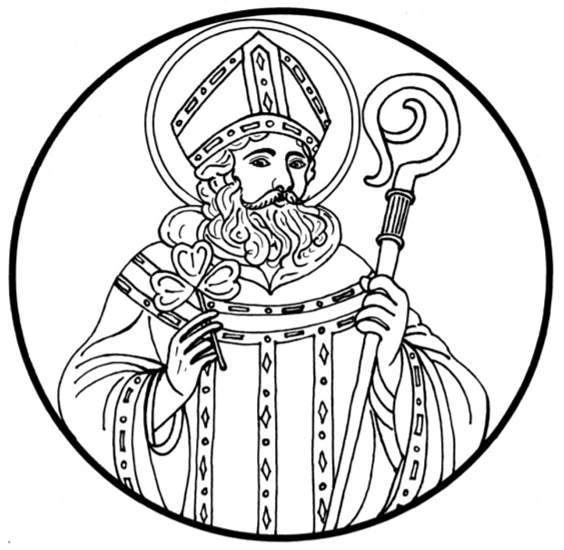
By 1953, sufficient funds had been gathered to construct a modest brick building capable of seating around 200 people. Many of the men who had laboriously prepared the site were from the Irish Club at the Cathedral; in honor of their sweat and dedication, the new church was dedicated to their patron, St Patrick, opening its doors on 26 April 1953. For the next four decades, it was the beating heart of Catholic life in Duston.
IV. The Franciscan Years
In 1955 the Bishop of Northampton, acting at the direction of the Vicar General of the Archdiocese of Liverpool, invited the English Greyfriars (Conventual Franciscans) to take on the pastoral care of the western parts of Duston and Dallington. Simultaneously, the Cathedral had acquired land in Dallington to build St Margaret of Cortona, which the Franciscans would also run.
Fr Richard OFM Conv., Guardian of the Friary, arrived first. Having nowhere stable to live, he resided entirely within the sacristy of St Patrick's, while local parishioners took sequential turns preparing and feeding him his main meals.
In 1956, Pond House — the large estate opposite the church — was purchased, cementing the Franciscan community. After the Provincial Chapter of 1970, a new Franciscan Study Centre was established in Canterbury and the novitiate was moved to Pond House.
Following a Province Chapter decision in 1985, a permanent presbytery was constructed at St Patrick's. Upon its completion in 1986, the new Parish Priest moved in, Pond House was disposed of, and the novitiate transferred to a Friary at Barton-on-Irwell near Eccles — marking the close of their immense chapter in Duston.

Vatican II (1962–1965)
The Mass in English. The altar turned toward the people.
An astonishing theological inflection point. The 1953 brick church on Peveril Road had been forged for the ancient Tridentine rite; the church that would eventually replace it was conceived for the reformed liturgy. They emerged not merely as 'old and new', but as two distinct theological epochs upon the exact same plot of land.
V. The Present Church (1994)
By the early 1990s, a surging congregation had drastically outgrown the 1953 brick church. In a beautiful echo of their origins, the parish temporarily moved back to attending weekend Mass at the Duston Village Institute — the very place their story had begun half a century earlier in 1939 — while weekday Masses were held in the new presbytery. Over the ruins of the old building, a sprawling new basilica-like nave was raised.
The present church was solemnly dedicated on 27 May 1994. Under the patronage of St Patrick, it was served diligently by diocesan priests for twenty years until 2013, when Fr Benny Joseph MSFS and his team arrived to proudly continue the pastoral legacy.
